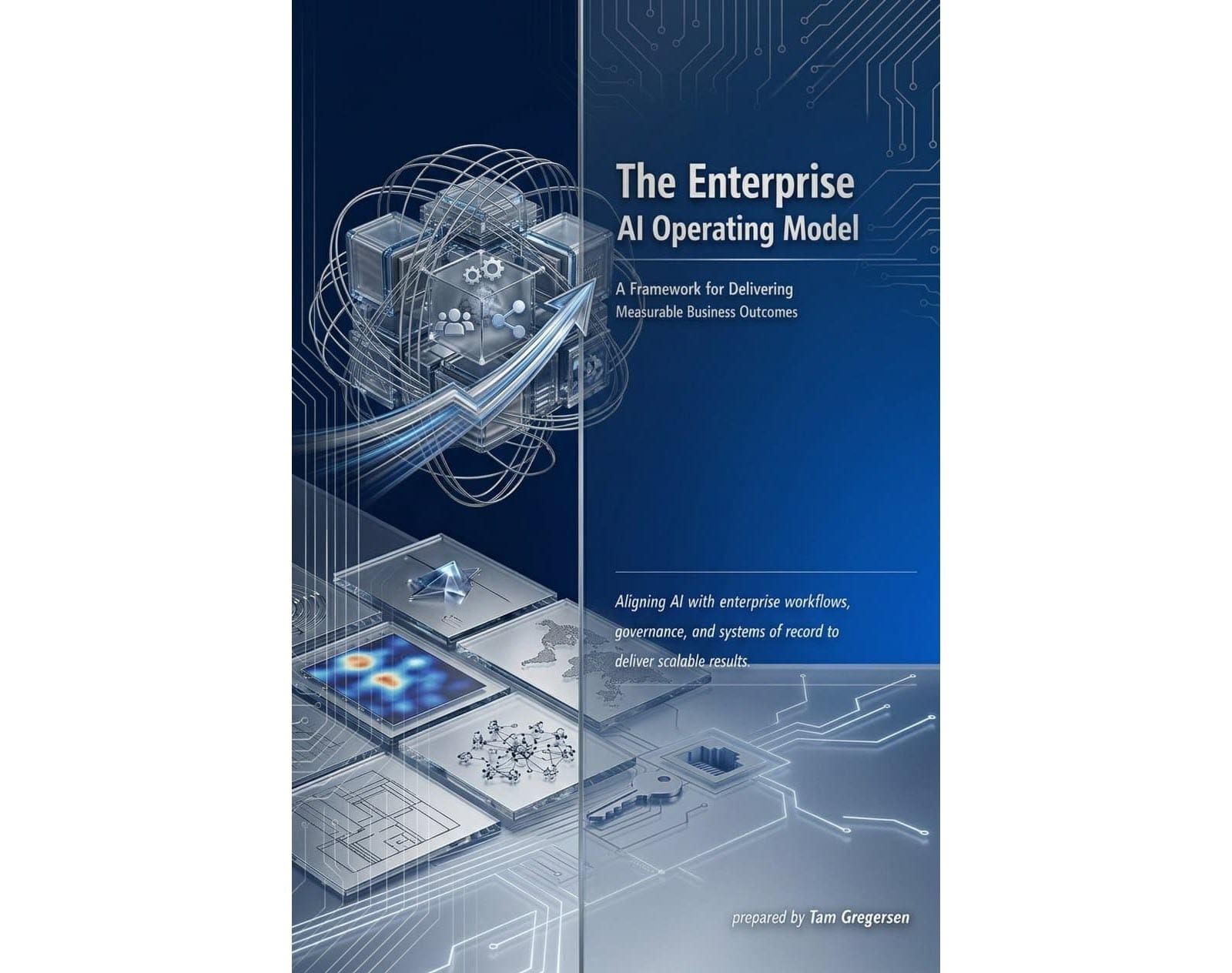
The Enterprise AI Operating Model: A Framework for Delivering Measurable Business Outcomes
Most organizations are using AI. Few are capturing its value.
McKinsey found that 65% of organizations are regularly using generative AI. BCG found that 74% have yet to show tangible value from it. Those two numbers describe the same moment in enterprise AI — and they explain why so many AI programs feel busy without being consequential.
The gap isn't a technology problem. It's an operating model problem.
AI can create real productivity gains at the task level. But durable enterprise value — the kind that shows up in cost structures, throughput, and competitive position — requires something different: workflow redesign, governance discipline, and explicit accountability for outcomes. Most organizations are still waiting for the tool to do that work for them.
This paper presents the strategic framework behind The Enterprise AI Operating Model — the book that goes deeper on every concept introduced here. It covers:
- Why AI pilots stall — the eight failure patterns that repeat across industries regardless of vendor or sector
- The four strategic principles that separate organizations compounding AI returns from those generating activity without impact
- The three-stage adoption model — Assist, Redesign, Automate — and where enterprise-scale ROI actually appears
- The ROI Gate — the five questions every AI initiative must answer before advancing to scaled deployment
- The governance model — including how to structure the AI Value Governance Office for your organization's size and maturity
This is a decision and governance framework for executives — not a technology roadmap.
Free to read. Subscribe for instant access to The Enterprise AI Operating Model: A Framework for Delivering Measurable Business Outcomes and everything else on Operating Altitude.
No Spam. Unsubscribe anytime.